


A Bold National Initiative for Poultry Self-Sufficiency
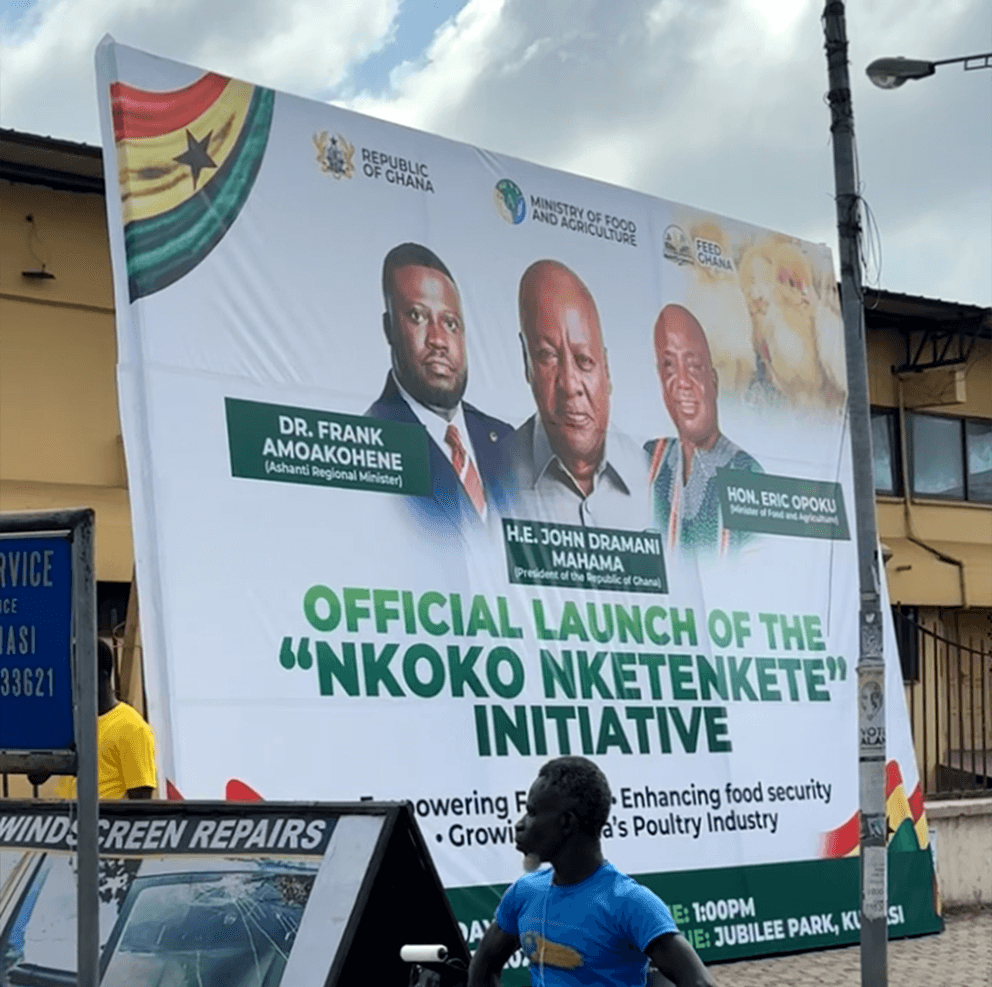
On Wednesday, 12 November 2025, the Government of Ghana officially launched the Nkoko Nketenkete Poultry Feed Initiative in Kumasi, a flagship program poised to transform the poultry industry. This ambitious initiative, launched by President John Dramani Mahama, aims to drastically boost local poultry production and reduce Ghana’s heavy reliance on imported chicken. Under the program, 3 million poultry birds will be distributed across all regions, bringing poultry farming literally to the doorsteps of ordinary Ghanaians in households, schools, and communities.
The goal is to empower 60,000 household-scale farmers in all 276 constituencies, enabling even backyard poultry keepers to participate in commercial production, with an expected 3,000,000 birds ready for market within just six weeks of the rollout.
This initiative isn’t just about raising chickens; it’s about uplifting livelihoods and achieving food security. In its first phase, each beneficiary household receives a starter package of 50 day-old chicks, an initial supply of feed, and ongoing technical support to ensure the chicks grow healthy and strong. By providing training and veterinary guidance alongside the birds and feed, the program helps families turn a small flock into a sustainable micro-enterprise.
It’s a deliberate strategy to shift poultry rearing from subsistence to a profitable venture for everyday Ghanaians. The program especially focuses on women, youth, and vulnerable households, empowering them with a new source of income and nutrition. As President Mahama emphasized at the launch, Nkoko Nketenkete represents a “national effort to restore food self-sufficiency, improve household resilience, and create sustainable livelihoods for thousands of Ghanaians”, particularly among marginalized groups.
The impact of Nkoko Nketenkete is expected to be felt nationwide in short order. Not only will it boost local meat supply, but it addresses a critical economic issue: Ghana had been spending over $350 million annually on imported poultry products in recent years. By empowering local farmers to produce and sell millions of birds domestically, the country can retain this revenue, strengthen its currency, and create jobs.
Early results are promising. Even before this national rollout, a pilot program in 13 districts (benefiting 13,000 farmers) demonstrated that backyard poultry can be “a transformative route to better nutrition, food security, job creation, and local agribusiness”, not a marginal activity. In other words, small farmers raising a few dozen chickens each can collectively make a big difference.
With this full launch, Ghana is taking a bold step toward reclaiming the pride of producing, processing, and consuming home-grown poultry, reversing decades of dependence on imports.
Public-Private Partnership: Government and A2 Agro Allied Collaboration
A key pillar of the Nkoko Nketenkete initiative is structured collaboration between government and capable private-sector operators. A2 Agro Allied, through its A2 Feed Factory division, partners with government and private-sector programmes to support poultry production in Ghana.
- A2 Poultry Farm operates as a subsidiary of A2 Agro Allied, forming part of the company’s integrated livestock value chain.
- The Ministry of Food and Agriculture recognised A2 Agro Allied based on its existing feed production capacity, consistent quality standards, and proven reliability, which informed the decision to partner with the company under the Nkoko Nketenkete initiative.
- The partnership is a commercial, paid arrangement, structured to ensure a consistent and reliable supply of quality poultry feed to programme beneficiaries nationwide.
- A2 Agro Allied’s feed factory in Kumasi was established independently as part of the company’s long-term growth strategy, driven by market demand and demonstrated feed performance.
- This collaboration illustrates how strong, commercially sustainable private-sector operations can effectively support national agricultural programmes while maintaining operational independence.
The “Nkoko Nketenkete Feed” Brand: A Game-Changer in Poultry Nutrition
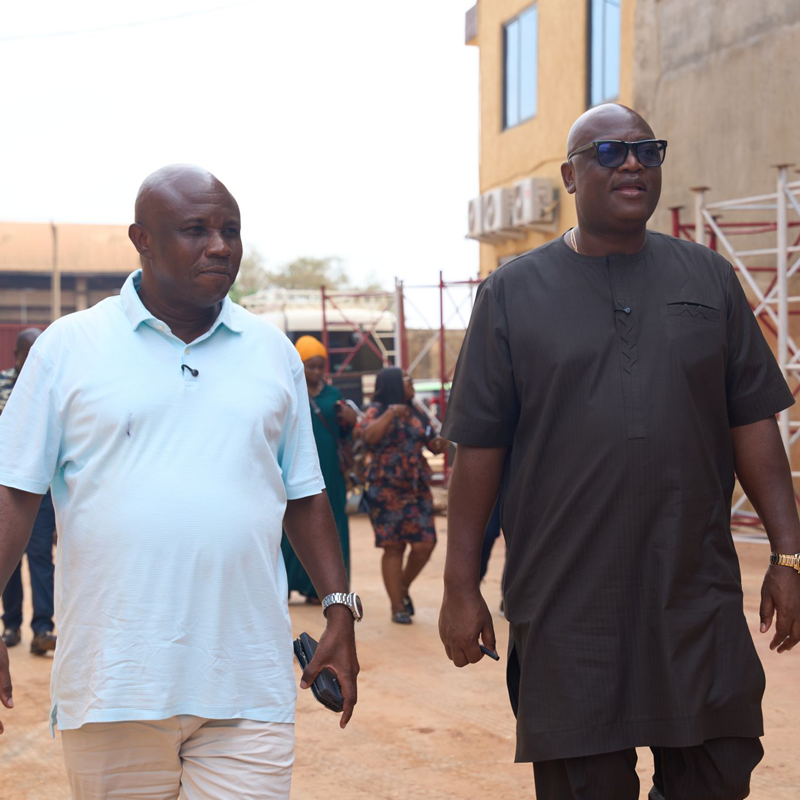
During a working visit in mid-2025, Agriculture Minister Hon. Eric Opoku toured the A2 Feed Factory located in Kaase, Kumasi. He commended the facility as a modern, high-capacity feed production plant playing a strategic role in Ghana’s poultry value chain. The factory is an operational facility that produces all A2 Feed products, including feed supplied under the government’s Nkoko Nketenkete initiative.
The A2 Feed Factory serves as a critical production hub for the poultry industry. While the factory does not operate maize silos, it has a verified soybean storage capacity of 14,000 tonnes, supporting consistent feed formulation and uninterrupted production. Maize inputs are sourced and managed through established supply arrangements rather than on-site silo storage.
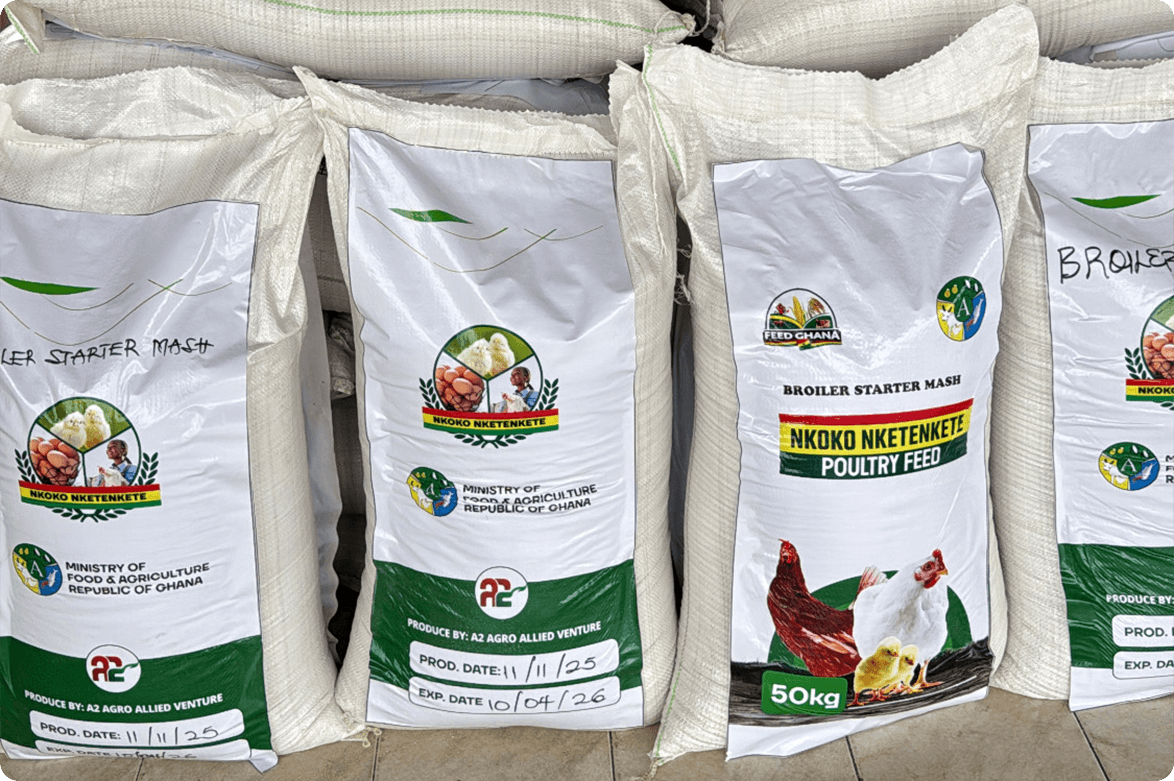
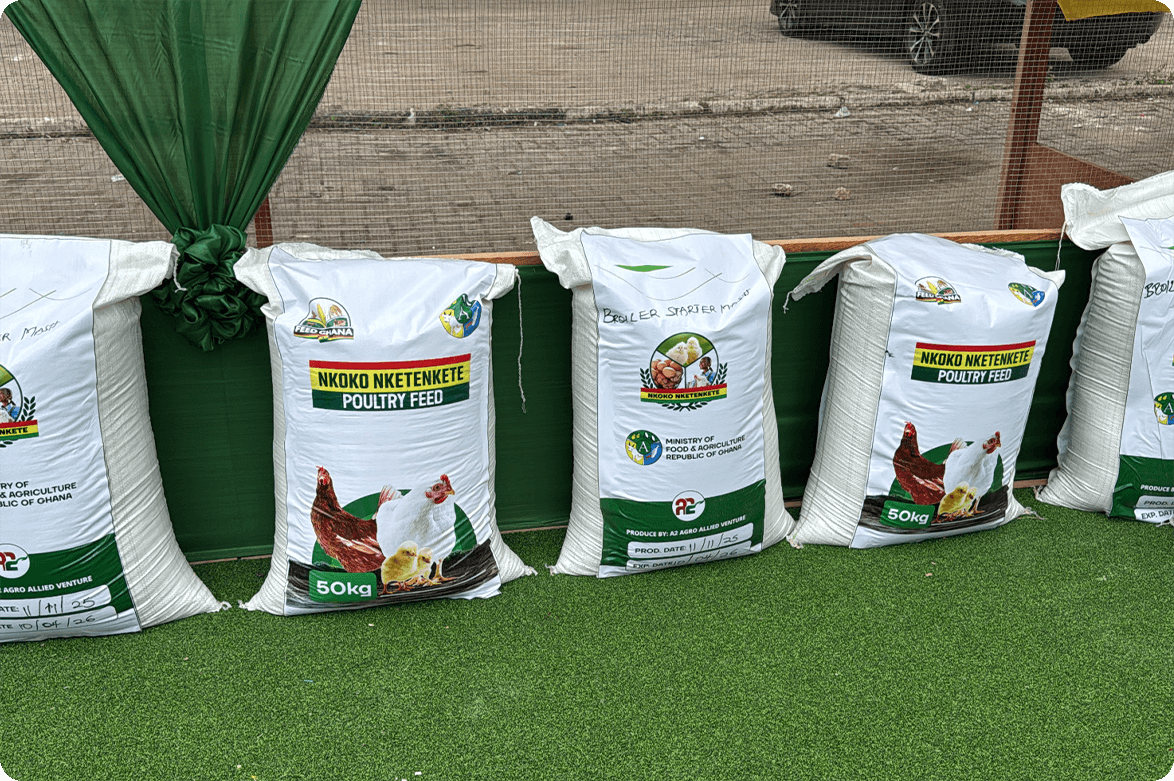
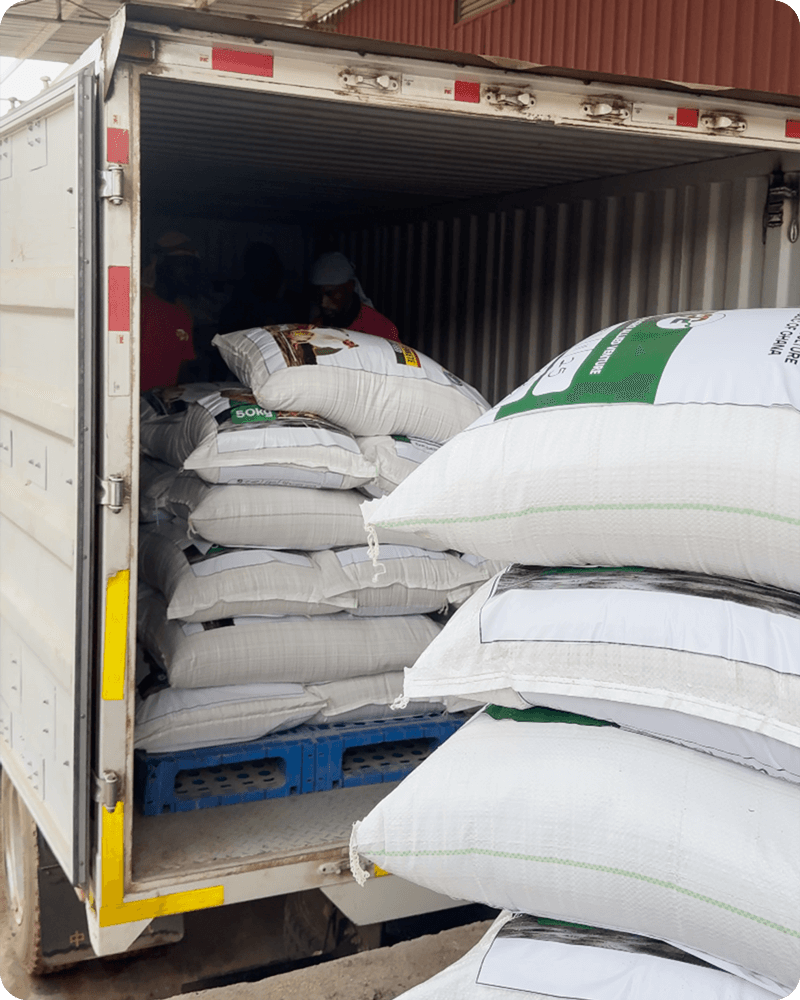
Feed produced for the Nkoko Nketenkete programme is manufactured at the A2 Feed Factory as part of a structured, commercial partnership with government, ensuring programme beneficiaries receive quality, nutritionally balanced poultry feed produced to the same standards as all A2 Feed products.
Beyond poultry farmers, the factory supports Ghana’s broader agricultural ecosystem by creating steady demand for locally sourced raw materials, particularly soybeans. By integrating feed manufacturing with local supply chains, A2 Agro Allied strengthens linkages between crop production and livestock farming, helping to stabilise input costs and retain economic value within Ghana.
“I commend A2 for this investment. This factory will help reduce feed-related constraints and support our efforts to expand local poultry production and reduce imports,” Minister Opoku remarked during the visit. Feed costs remain one of the largest expenses for poultry farmers, often accounting for 60 to 70 percent of production costs. Through its scale, consistency, and quality control, the A2 Feed Factory contributes to improving farmer productivity and long-term sector sustainability.


A2 Agro Allied’s State-of-the-Art Feed Factory: Precision Nutrition for Poultry
At the heart of A2 Agro Allied’s contribution is its state-of-the-art feed mill technology. The newly launched A2 Feed Factory in Kumasi is equipped with modern machinery capable of producing all forms of poultry feed, crumbles, pellets, and mash, to suit every stage of a bird’s growth. Whether farmers are raising chicks, growing pullets, broilers for meat, or layers for eggs, there is a specialized feed formula available.
Each of these feed products is formulated by animal nutrition experts to ensure the right balance of proteins, energy, vitamins, and minerals for optimal poultry health and performance. What’s more, A2’s feed recipes are rigorously tested on the company’s own farms (A2 Farms) before they ever reach the market, to guarantee their effectiveness.
This means the feed has been proven to deliver excellent results in terms of palatability, digestibility, feed conversion ratio, and overall bird health under real farm conditions. Farmers can have confidence that when they use Nkoko Nketenkete Feed, their chickens are getting top-quality nutrition backed by data and experience.
The feed factory’s advanced milling system also ensures consistency and quality control in every batch. Using computerized blending and precision equipment, A2 can tailor the feed to the specific needs of chicks, growers, or laying hens with pinpoint accuracy.
Such cutting-edge feed formulation is usually only seen in more industrialized farming systems; now Ghana’s farmers can access it too, thanks to this initiative. The term “state-of-the-art” isn’t just a buzzword: it reflects features like automated grinding, mixing, and pelleting processes that improve feed digestibility and reduce waste.
By staying ahead of industry trends in feed technology and embracing innovation, A2 Feed Factory is giving Ghana’s poultry sector an “innovative edge” and helping farmers raise healthier, heavier birds in less time. This bodes well for the success of Nkoko Nketenkete farmers, who will need every advantage to scale up backyard operations into commercially viable businesses.
Benefits for Farmers, Investors, and the Public
The launch of the Nkoko Nketenkete Poultry Feed Initiative carries multi-faceted benefits:
Empowering Small Farmers: For rural and peri-urban families, the initiative offers an accessible entry into poultry farming with minimal capital. With free chicks, free feed starter kits, and training provided, even first-time farmers can confidently raise a flock. The quick turnover (broilers can reach market weight in 6 to 8 weeks) means households can start earning income in a short time frame. Many beneficiaries may use profits from the first cycle of birds to reinvest in feed or expand their coop, creating a sustainable micro-business.
This empowerment is particularly targeted at women and unemployed youth, enabling them to become entrepreneurs in their own backyards. Success stories from the pilot phase, such as a young nurse who supplemented his income through backyard chickens, show how lives can change for the better when people are given the tools to succeed.
Attracting Investors to Agribusiness: The scale and structure of Nkoko Nketenkete send a strong signal to investors that Ghana’s poultry sector is on the rise. The partnership with A2 Agro Allied is a model of public-private cooperation, de-risking the venture by ensuring farmers have both a guaranteed buy-back market (through government-facilitated offtakers) and reliable input supply (through A2’s feed).
For agribusiness investors, opportunities exist across the poultry value chain, including feed raw material supply (maize and soybeans), veterinary and animal health services, processing, and cold-chain logistics to support rising poultry output. The A2 Feed Factory represents a substantial, independently funded capital investment by A2 Agro Allied, reflecting strong confidence in the long-term growth of Ghana’s poultry sector.
Feed production for the Nkoko Nketenkete initiative is integrated into A2 Agro Allied’s existing manufacturing operations under a structured commercial arrangement, ensuring scalability and consistency without the need for greenfield infrastructure. Beyond feed, the government’s broader Feed Ghana programme (of which Nkoko Nketenkete forms a part) includes complementary interventions such as modern hatchery development and poultry processing capacity, pointing to a holistic strengthening of the national poultry value chain.
Investors looking at Ghana can anticipate a more integrated and profitable poultry sector in the coming years, with supportive policies and infrastructure. The initiative’s emphasis on local production also means foreign exchange savings and a more stable economic environment, factors that boost investor confidence.
Boosting Food Security and the Economy: For the general public, the most immediate benefit will be increased availability of locally grown chicken meat and eggs at markets. As the Nkoko Nketenkete flocks mature, Ghanaians can enjoy fresh, homegrown poultry products, potentially at lower prices than expensive imports. This contributes directly to national food security, as a country more self-sufficient in food is less vulnerable to global supply shocks and price fluctuations.
Reducing poultry imports (currently a huge drain on Ghana’s foreign exchange) will improve the trade balance and can strengthen the Ghanaian cedi. Moreover, by localizing the entire production cycle (from grain to feed to chicken to table), the initiative creates jobs at each step: farmers growing corn and soybeans gain a steady market, transporters move grain to the feed mill, the feed mill employs technicians and laborers, veterinarians and extension officers support farmers, and traders handle the increased poultry output.
It’s a ripple effect of economic activity benefiting thousands. The government projects that hundreds of direct and indirect jobs will be created by the A2 feed factory and its supply chain alone. In the long run, as Ghana’s poultry industry revives, consumers can look forward to improved food quality and safety, and a sense of national pride in “eating what we grow.”
A New Dawn for Ghana’s Poultry Industry
The Nkoko Nketenkete Poultry Feed Initiative marks a new dawn for poultry farming in Ghana. It symbolizes a shift from dependency to self-reliance, a bold movement to “produce, process and consume what we ourselves grow” as President Mahama declared. By uniting government vision, community participation, and private sector innovation, the initiative creates a powerful synergy.
A2 Agro Allied’s state-of-the-art feed factory is a cornerstone of this synergy, ensuring that the surge in poultry rearing is matched with the quality feed supply needed to sustain it. This integrated approach greatly improves the chances of success: farmers have the chicks, the feed, the training, and a supportive market environment to thrive.
As the Nkoko Nketenkete program rolls out nationwide, excitement is growing among farmers and stakeholders. In farming communities, many see this as an opportunity to significantly improve their livelihoods. “This is clear evidence of how agribusiness can drive youth employment and transform local economies,” Minister Opoku noted, highlighting the transformative potential at the grassroots.
In the investment community, the initiative is being watched as a test case for agribusiness development through public-private partnership. And for the average Ghanaian, there is optimism that soon the chicken on their dinner plate will be proudly Ghanaian-grown, with the entire value chain, from feed mill to farm to market, benefiting local hands.
In conclusion, the launch of the Nkoko Nketenkete Poultry Feed Initiative is more than a single event; it is the beginning of a new era for Ghana’s poultry sector. It combines visionary policy with cutting-edge technology and community empowerment. A2 Agro Allied and its ultra-modern feed factory stand ready as committed partners in this journey, delivering the nutritious feed and technical know-how to make the vision a reality.
With continued support and collaboration, Ghana is well on its way to hatching a brighter, self-sufficient future, one chick, one bag of feed, and one farmer at a time.